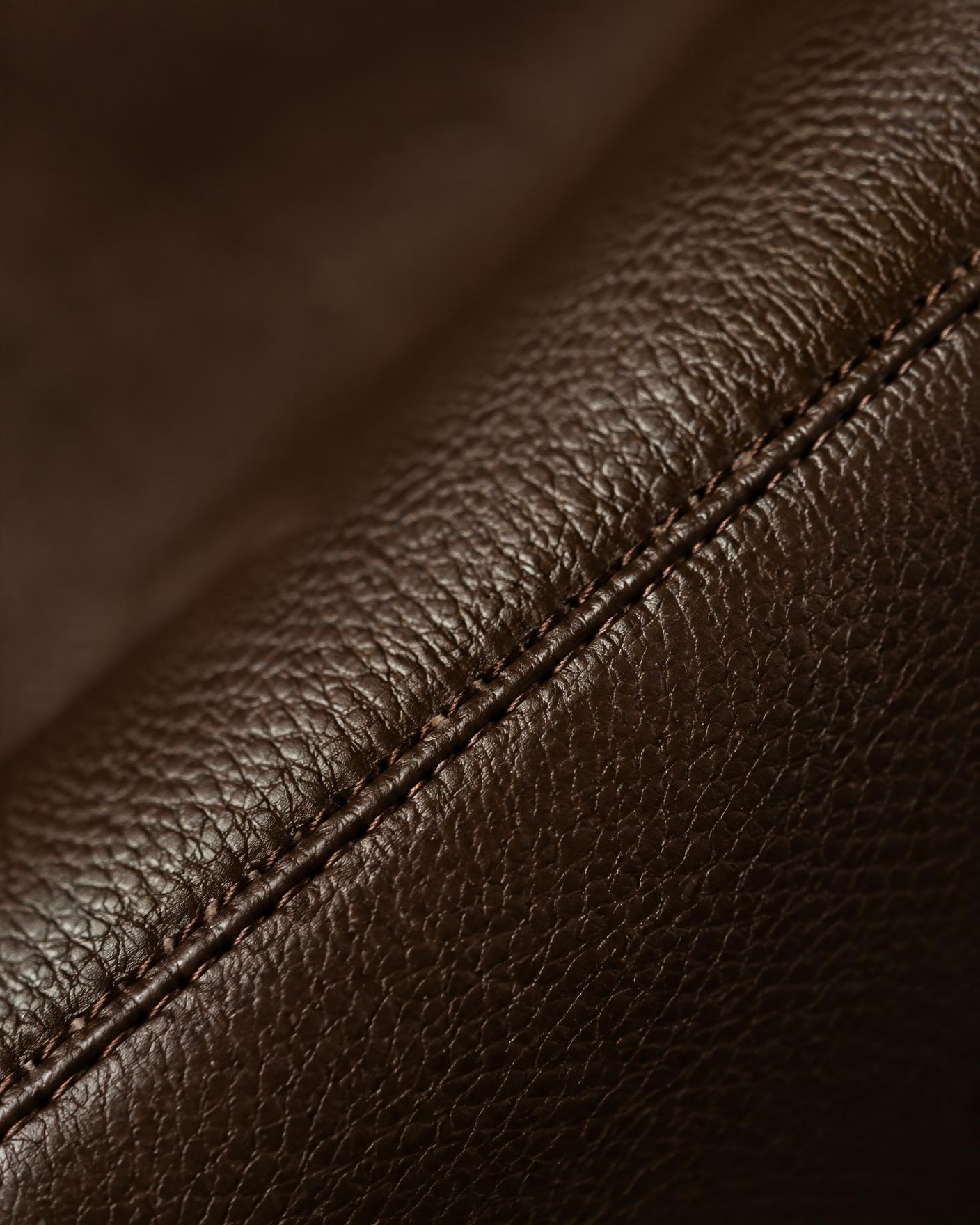
Every maker's machinery leaves a signature: stitches per inch, needle angle, thread tension, and whether the count stays consistent around curves and corners. Counterfeits often look beautiful at arm's length and fall apart at half an inch. I count first and admire later.
Nhu's Clues
Every item tells a story. I read the clues.
Yes, the name is a play on a certain clue-following detective show. It is also the most honest description of my work. Authentication is a daily practice of noticing, built on context clues and brand identifiers, and it is how I was trained, how I still work, and how I teach.
A living page of clue files from a working authenticator. Tap a clue to see what I notice.
The practice
Practiced daily, taught in plain language.
Nobody is born knowing what a real one looks like. You build the eye one clue at a time, and then you keep it sharp by using it every single day.
I authenticate every week, and every item that crosses my desk is a small puzzle. The physical details are only half of it. The other half is context: when the piece was made, what was offered that season, whether the story attached to it holds together. Authenticity lives where the object and its history agree.
The clues below are the pillars I return to, the same fundamentals I teach to sales floors, intake teams, and working authenticators. They are deliberately general. The specific identifiers for each house and each category are exactly the kind of material I build for clients in training sessions and reference guides.
Clue files
Eight clues I check before I say a word.
Tap any clue to see what an expert notices. No single clue decides a piece on its own. The verdict comes from how they all line up.
Engraving should be crisp and evenly deep, plating should feel substantial, and the screws, rivets, and feet on the underside should match the quality on display. The bottom of a bag tells the truth faster than the front of it.
A heat stamp carries a whole vocabulary: typeface proportions, letter spacing, stamp depth, and how the characters sit on the material. A single letter pressed too shallow or drawn too round can quietly end a conversation.
Lining materials, seam finishing, pocket construction, and interior stamping are expensive to fake well. Counterfeit budgets are spent where the photos happen. I always look where they didn't.
Grain pattern, weight, smell, and the way a material creases and returns are difficult to counterfeit. Canvas weave, leather temper, and edge paint all age in predictable ways, and the condition has to agree with the story.
Pattern matching across panels, logos centered on their patch, hardware seated straight and true. Consistent alignment across an entire item reflects an industrial discipline that is very hard to reproduce by hand.
Hardware finish, patina, corner wear, and interior condition should all tell the same story about how old an item is and how it was used. When one element looks newer than everything around it, that is not a detail. That is a clue.
Style codes, production eras, the hardware finishes offered in a given season, and what a seller's account explains versus what it conveniently leaves out. Context clues are the pillar that ties every physical observation together, because an item that looks fine but historically could not exist is still not right.
Where the clues go to work
Reading clues is a skill. Skills can be taught.
These pillars are the foundation of my team training, my hosted authentication events, and the reference resources I build for resale businesses. Guests at an event get the fun version, a guided look at what experts notice. Teams get the full version, calibrated to their inventory and their level.
Inquire
Want your team reading the same clues?
Tell me about your business and your team. I will come back with a scope built around what you need, from a single workshop to an ongoing series.